
Substrates explained
Which substrate should you paint on?
If you have just started painting, you might be overwhelmed by all the options of what to paint onto. Which substrate should you buy? Here I explain some of the many options you can choose from and which are my preferences
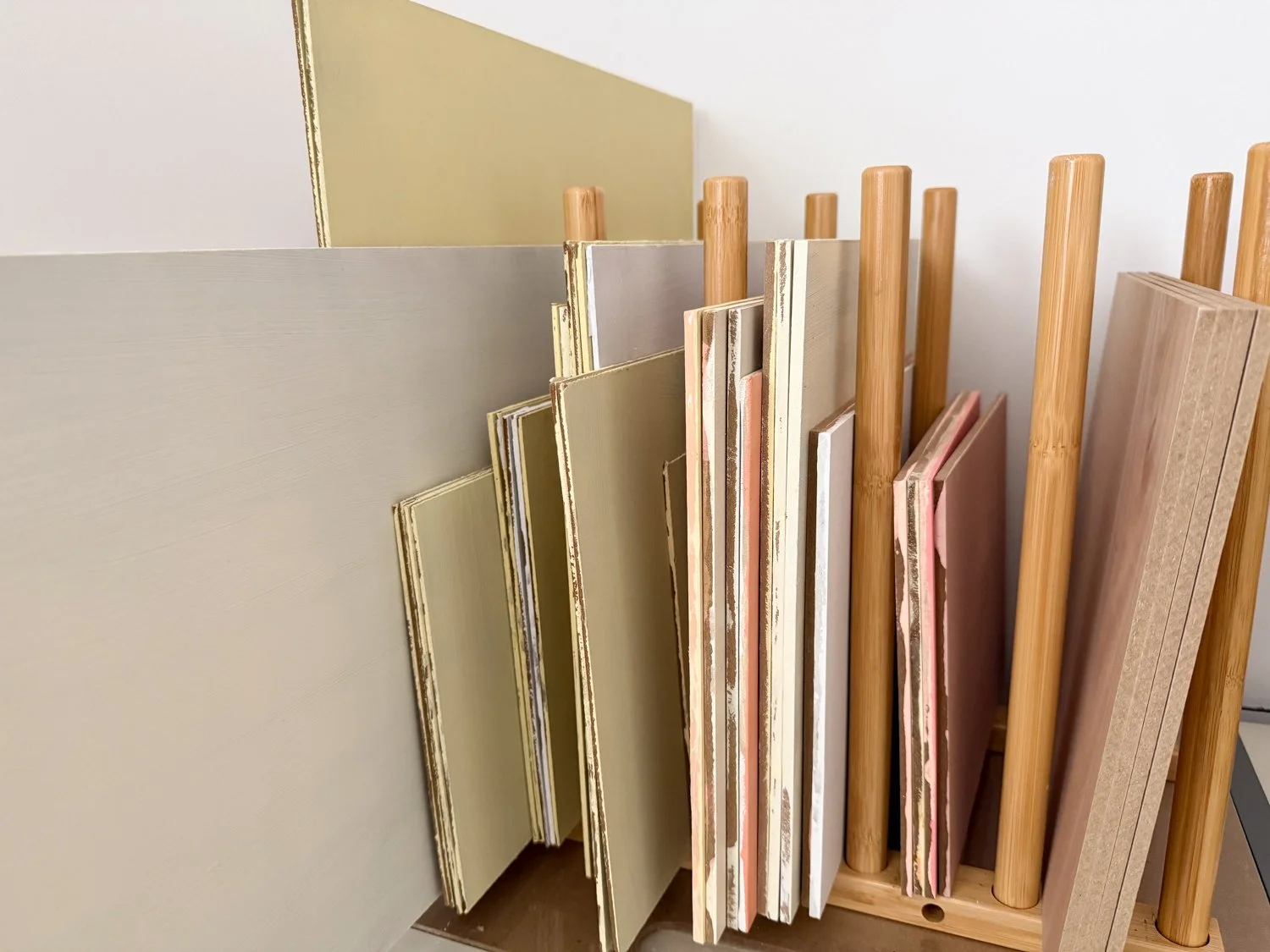
I have to admit, that I’ve changed my mind many times over the last few years and what you choose to paint onto is completely subjective. It really depends on what type of paint you use, what style you paint, do you want to paint large or small, and how will the final painting be displayed? There are many options and it’s best just to try some out until you find something that suits your needs. Here are just a few suggestions to steer you in the right direction:
Paper
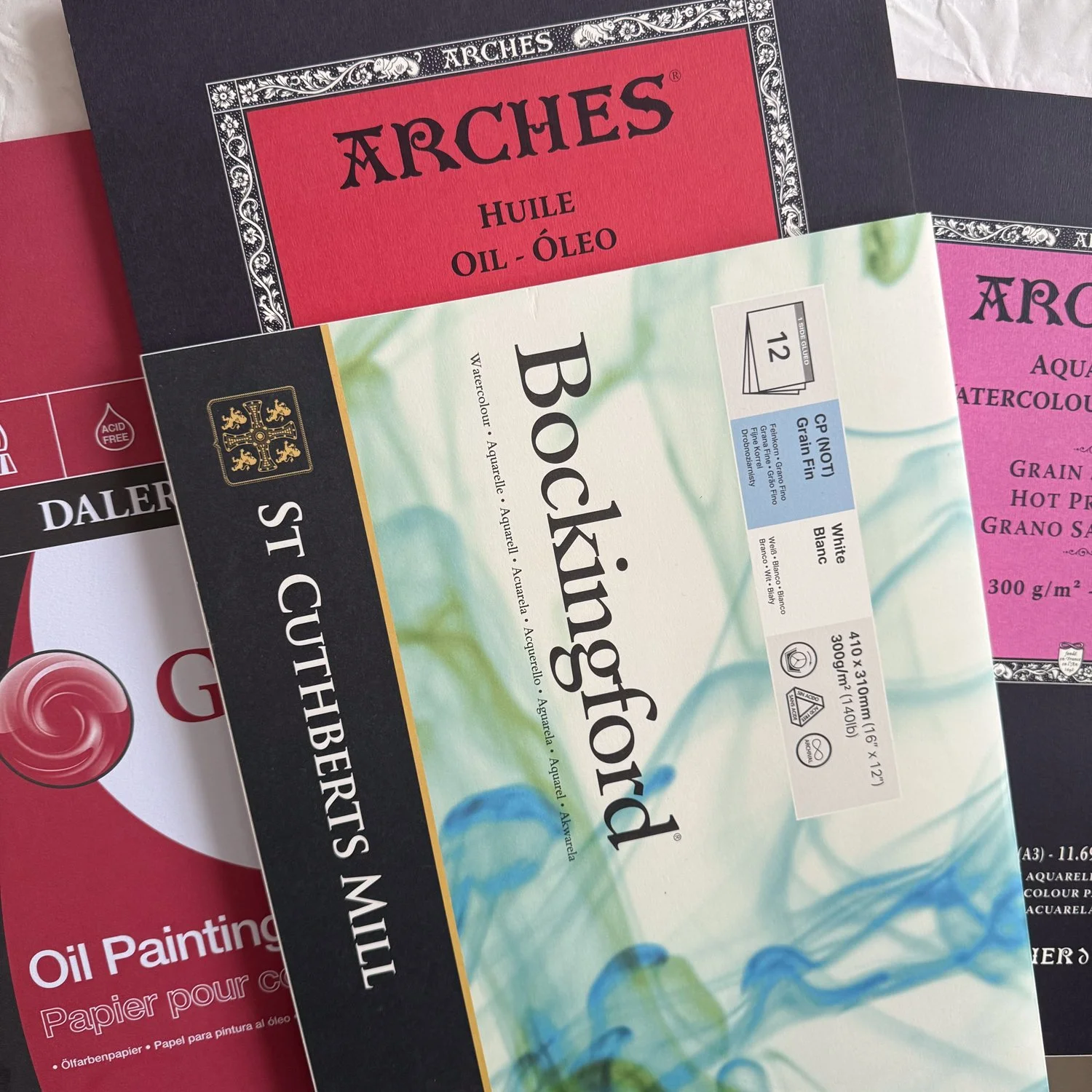
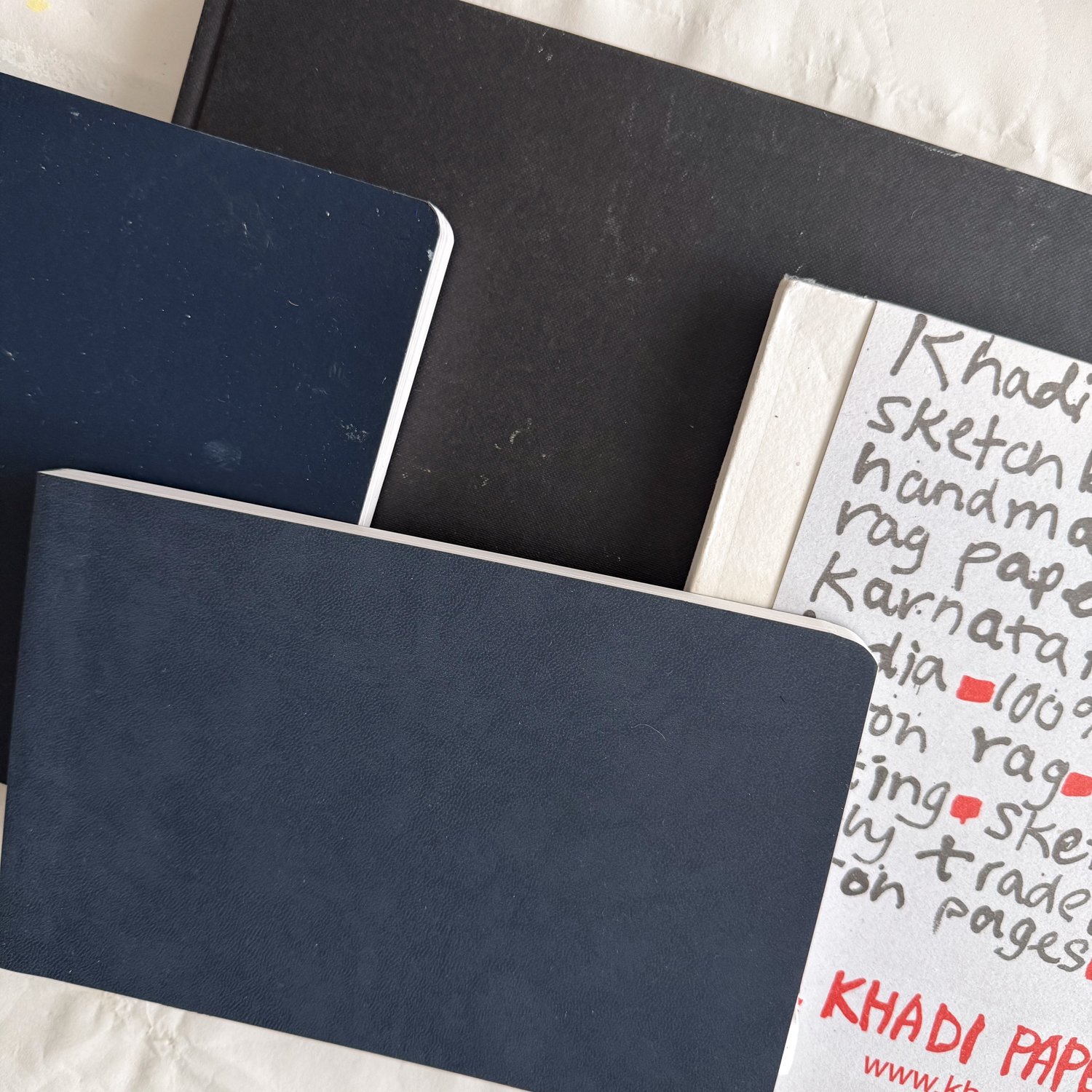
The cheapest form of substrate is paper. It’s also the lightest and easiest to transport if you wish to paint on holiday for example. There are papers to suit all methods of painting, from sketching to inks, to watercolour or mixed media or oils. You can buy sketch books, single sheets, pads or gummed blocks. There is so much choice out there! Papers also come in different thicknesses and as a rule the thicker the better as it’s less likely to tear. Personally I like anything over 200 gsm.
Some papers are textured (especially for water colour painting), cold pressed (textured) and some are hot pressed (smoother). Some papers resemble linen or canvas, such as some oil painting papers. There are also hand-made papers such as Khadi papers. You can pretty much paint onto anything and if it absorbs paint too much, then prime the paper with a layer of gesso first. You can buy gesso in either white or clear, so for example if painting onto Khadi papers and you wish to see the beautiful paper in the background, then use clear gesso. You can also use shellac for priming paper or sketchbooks and it will protect the paper even for oils (so the oils don’t seep through the paper and onto other pages).
My personal preference is smooth paper (hot pressed) so the paint stays more on the surface of the paper and is less absorbed. It can move around easily and is great for mark-making too.
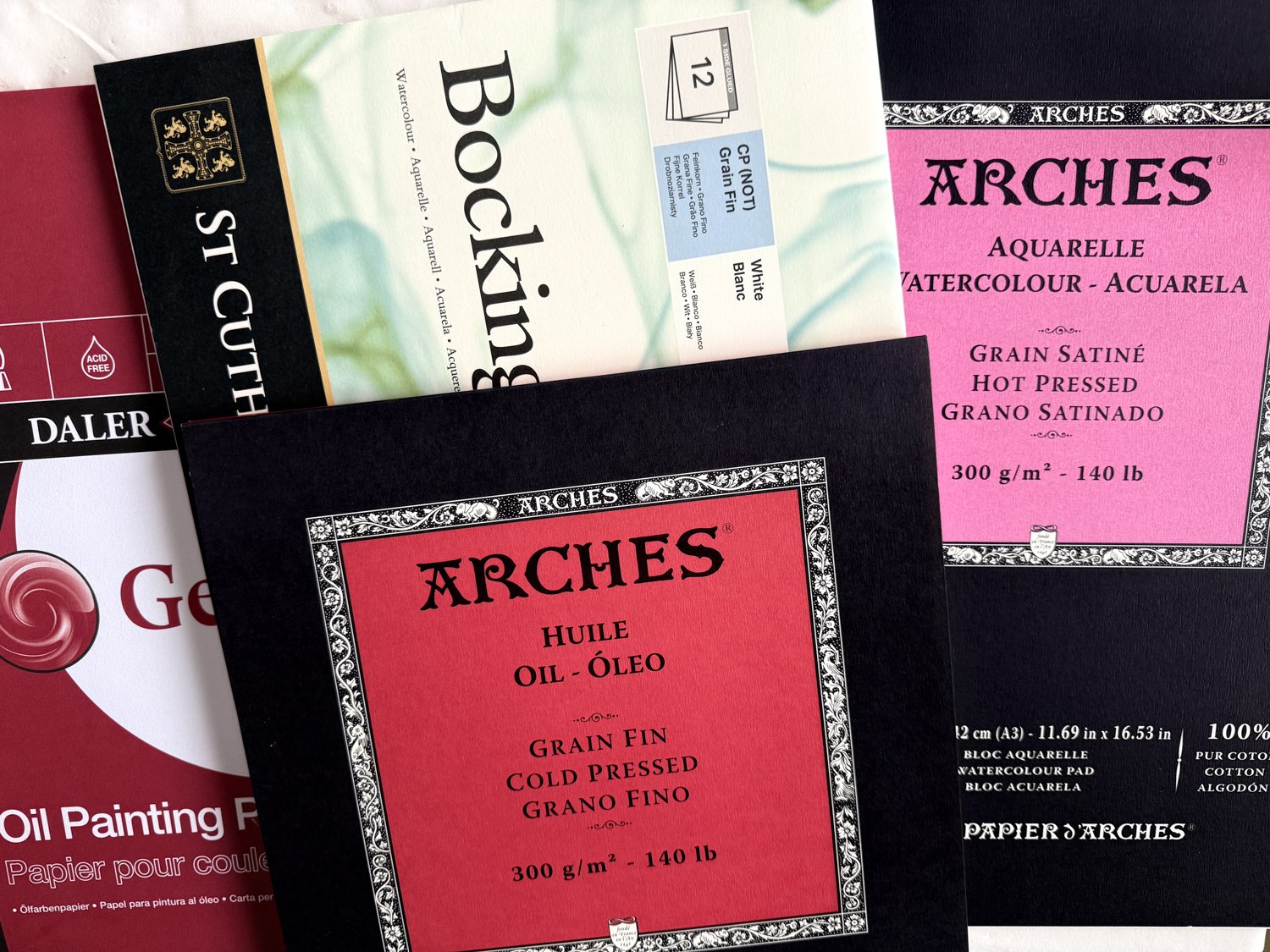
There are many, many options of paper pads, blocks, single sheets or sketchbooks to choose from
Stretched canvas (or linen) - these can be cradled or uncradled boards/panels
Most people have heard of canvas. I won’t write much about it here as personally I prefer not to use it. This is purely because I like to paint expressively and to use etching tools for scratching into and so for this I prefer wood panels. However, depending on your style of painting, you might prefer canvas or linen - it’s best just to try them out. Stretched means that it’s put onto wooden stretcher bars (you can also buy it off the roll and stretch it yourself if you prefer but for beginners it’s best to buy ready-stretched). Canvas or linen are good for fine-art oil painting and are good if you want something lightweight to ship as it’s lighter than wood. However using wood is more hard-wearing than canvas or linen.
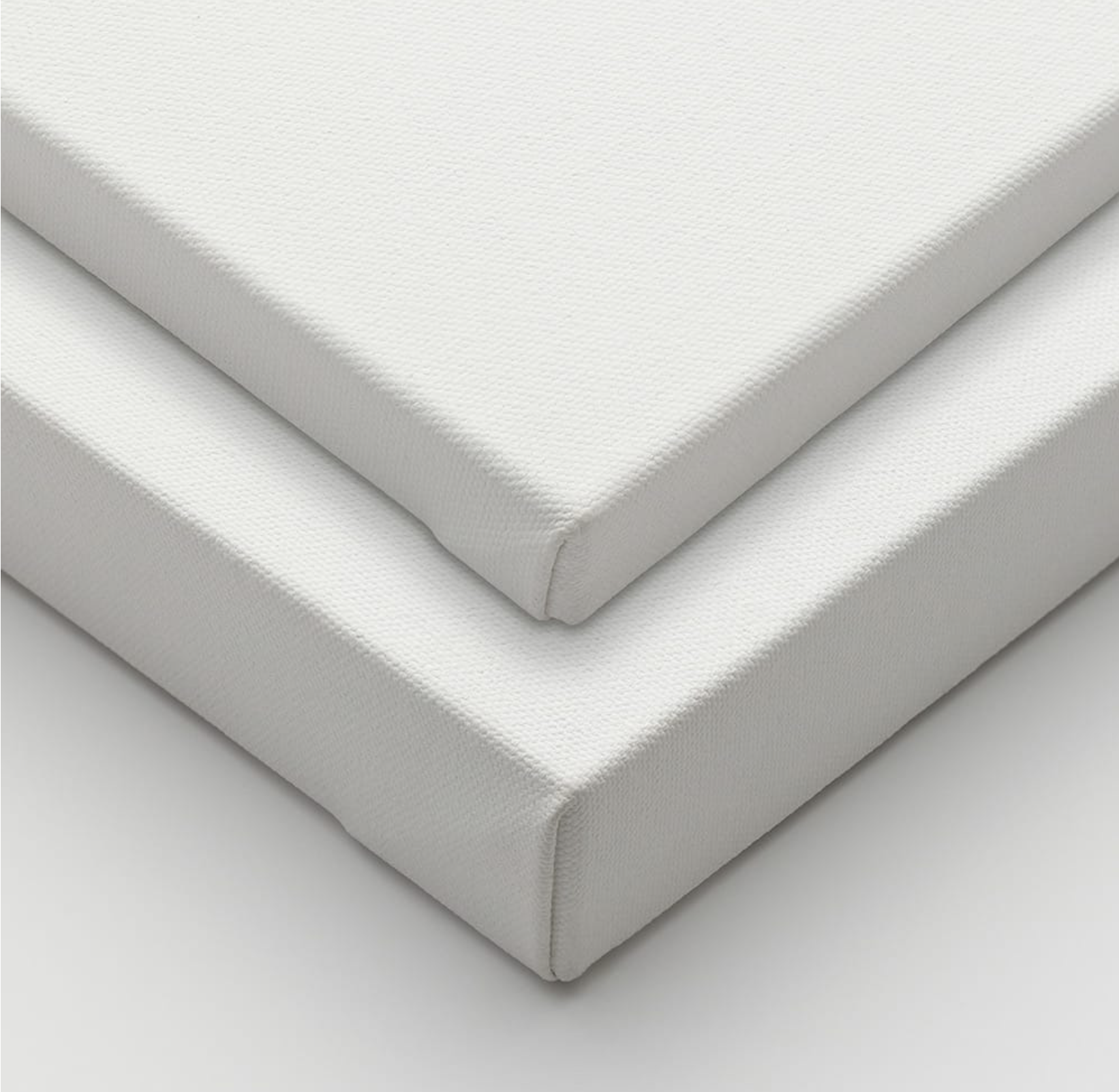
Stretched Canvas
The canvas is stretched over wood batons. You can buy them ready stretched like this or buy canvas on rolls and stretch them yourself
Cradled wood
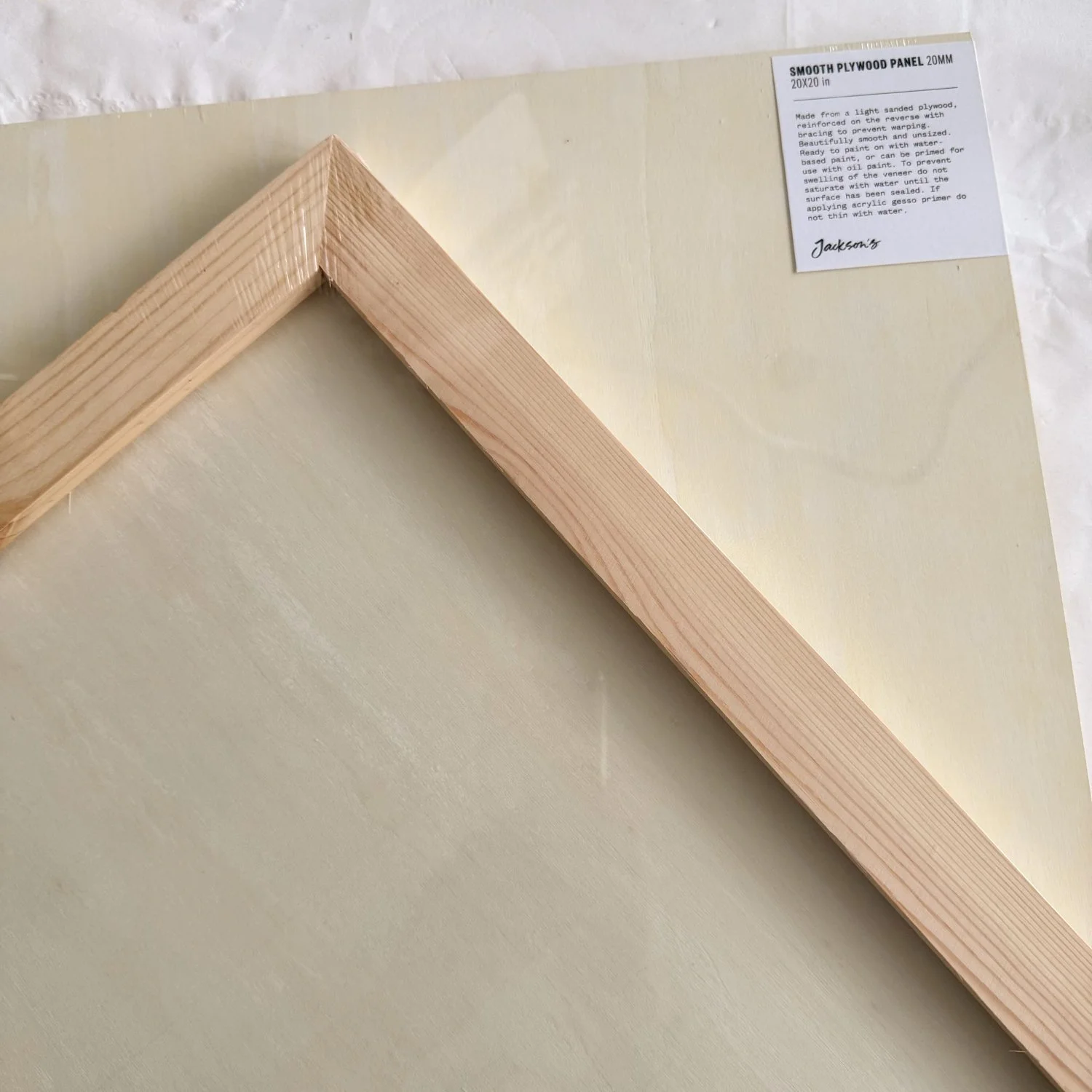
Cradled wood panels
Usually made with plywood and usually unprimed. These come in many different sizes and a choice of two depths, usually 20mm or 50mm
Personally I like the smoothness of painting onto plywood cradled panels. As mentioned above, wood is great for all kinds of painting styles and especially for mixed media and expressive painting where you might want to use etching tools to scratch into your paint. Wood is more durable than canvas and less prone to warping (although it can warp so store them flat if possible). These can be hung easily by attaching D-rings with picture cords onto the backs. Cradled wood comes in all kinds of sizes and usually comes in two options for depth, either 20 mm or 50mm. If in the UK, I recommend Jackson’s cradled wood panels and I prefer the depth of 20mm. These usually come unprimed and you can paint a couple of coats of gesso (acrylic) on them and they will then be perfect for painting onto with any kinds of paints and mediums (including oils).
Wood panels/boards
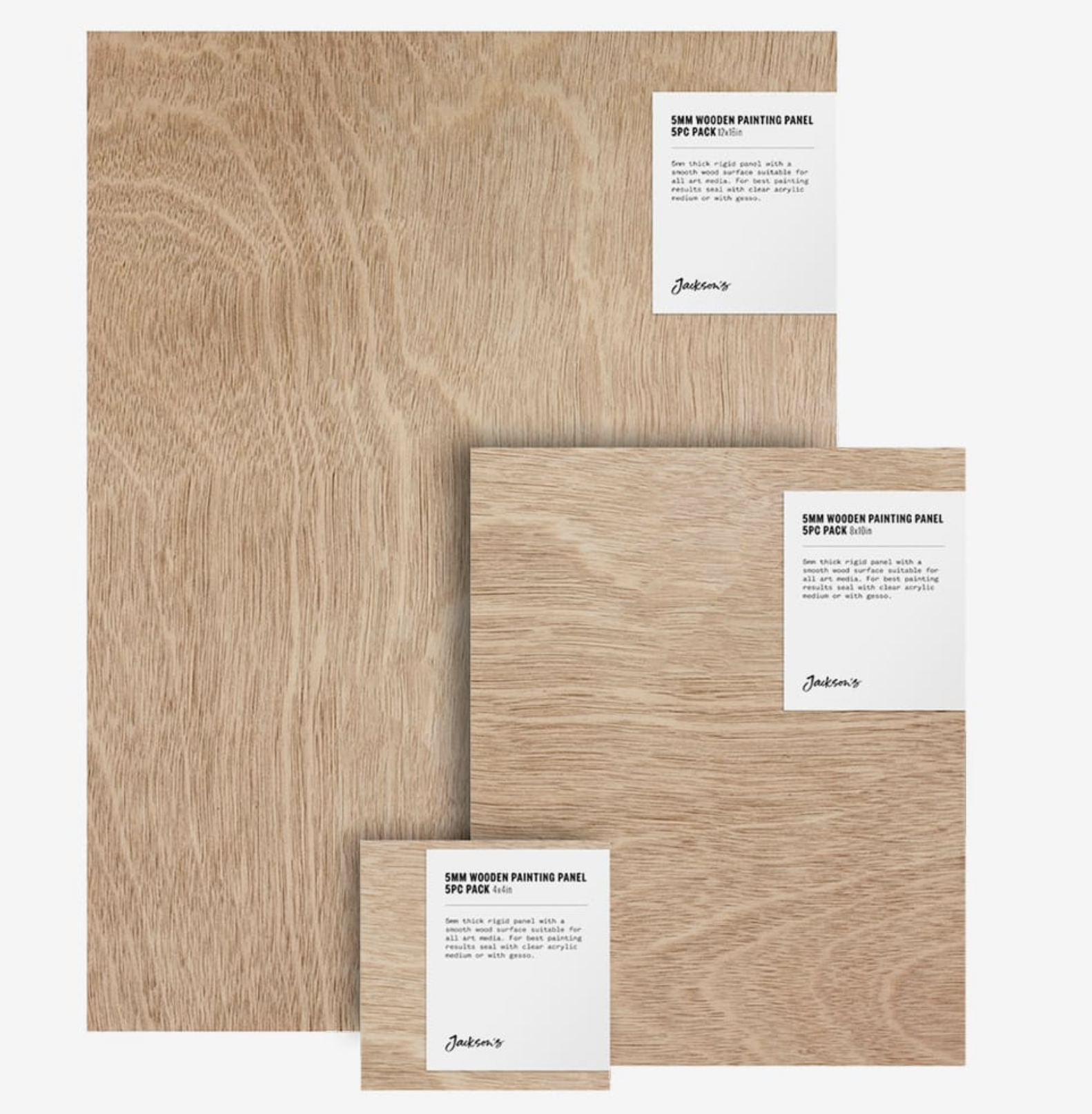
Uncradled Wood Panels/boards
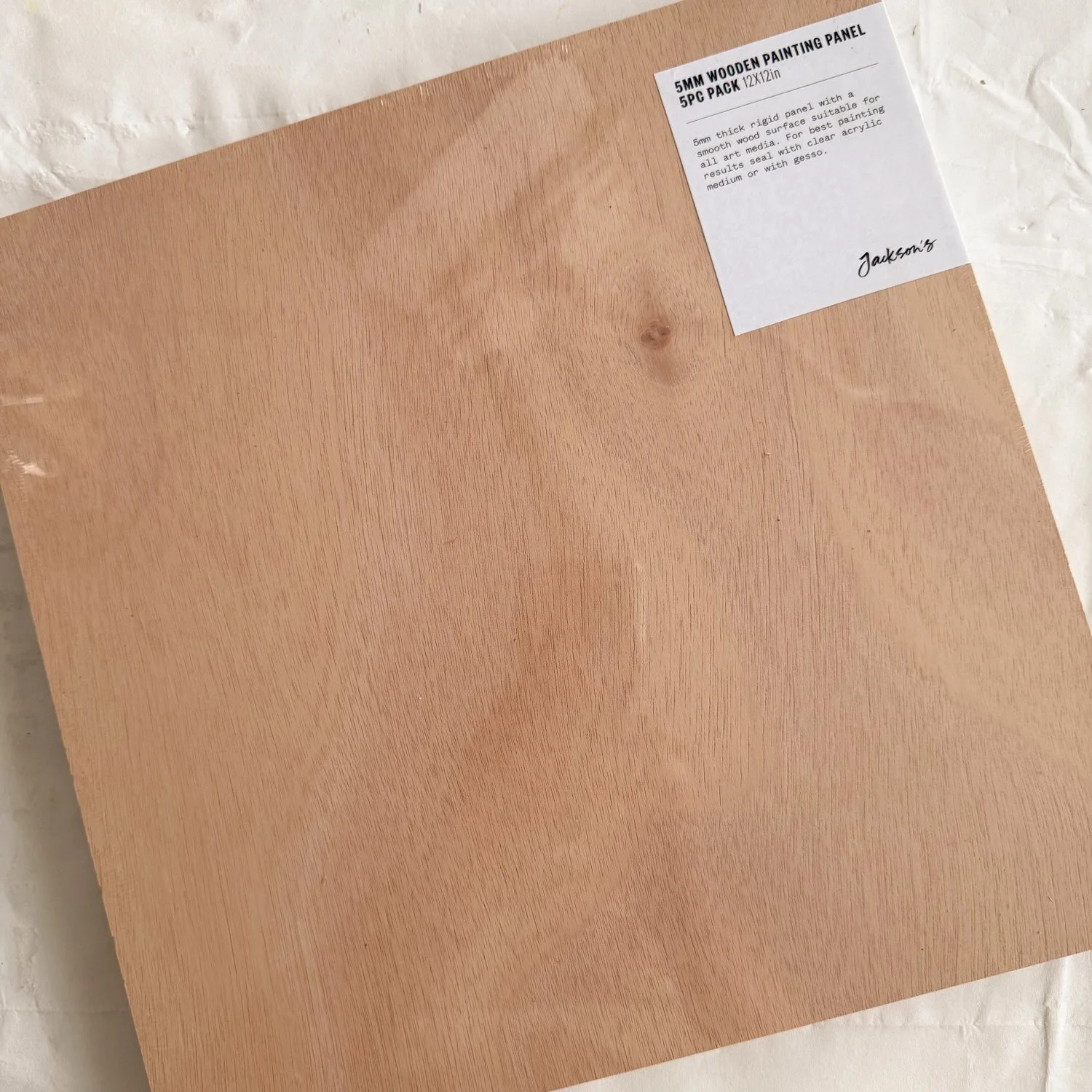
These are usually unprimed and come in many different sizes with a much thinner depth of either 2.5mm, 3mm or 5mm
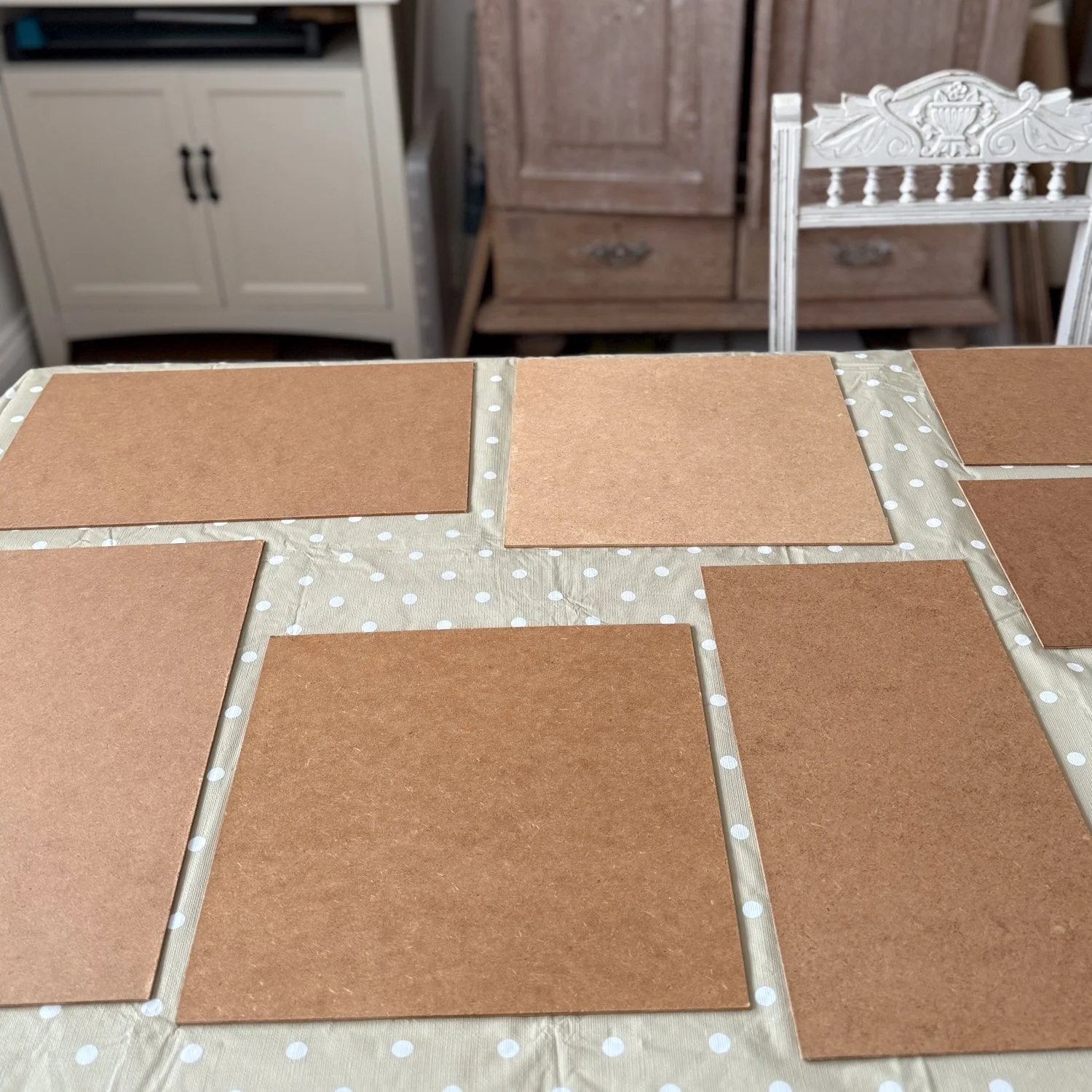
The advantage of wood panels instead of cradled wood, is that they are thinner and more lightweight. This is better for storage in your art studio, better for taking on location when painting “en plein air” or better for travelling with, when going on art retreats. They are usually about 3mm or 5mm thick. They are often made of MDF or similar or hardwood. However these are only good in small sizes because if you go too large they are not strong enough to not warp (so cradled panels are best for large sizes such as 50 x 50cm).
They come either unprimed or primed, so depending on your budget, unprimed is always cheaper, but then you have to prime them yourself (see my next blog post about priming wood panels). If in the UK, I recommend Jackson’s wood panels (unprimed, 5mm), or if you have the budget, then Ampersand’s primed gesso boards - which are lovely and very smooth! These are only 3mm, however they are very expensive. Ampersand also have an “Artists panel” which is cheaper than their gesso boards and as far as I can tell the only difference is that the primer they use is not quite as robust as their gesso panels. Ampersand use a very strong, properly sealed hardwood for their panels.
If you are painting a lot and need more quantity rather than quality, I recommend asking your local framers for some of their backing boards which they use for framing. These are usually thinner (2.5mm) and cheaper than the wood panels above. For example, Brampton’s framers have good value backing boards, as do Forest frames (online) or Trescoll framers (online). Just beware they will need to be primed, they are also prone to warping as they not as strong as the boards above, but they do the job especially if you are painting a lot in smaller sizes (the smaller the size the less likely to warp).
NB: If travelling with boards and if weight is an issue, I have noticed that the Ampersand boards are almost as heavy as the Jackson’s wood panels (1kg lighter for x5) even though they are thinner.
Paper or 2.5mm backing boards are the most lightweight for travelling.
I hope that has been of help. Have fun trying out substrates and let me know which is your favourite?!
Check out my next blog on how to prime a board ready for painting