
How do I prepare boards ready for painting? Here I’ll explain how I go about it:
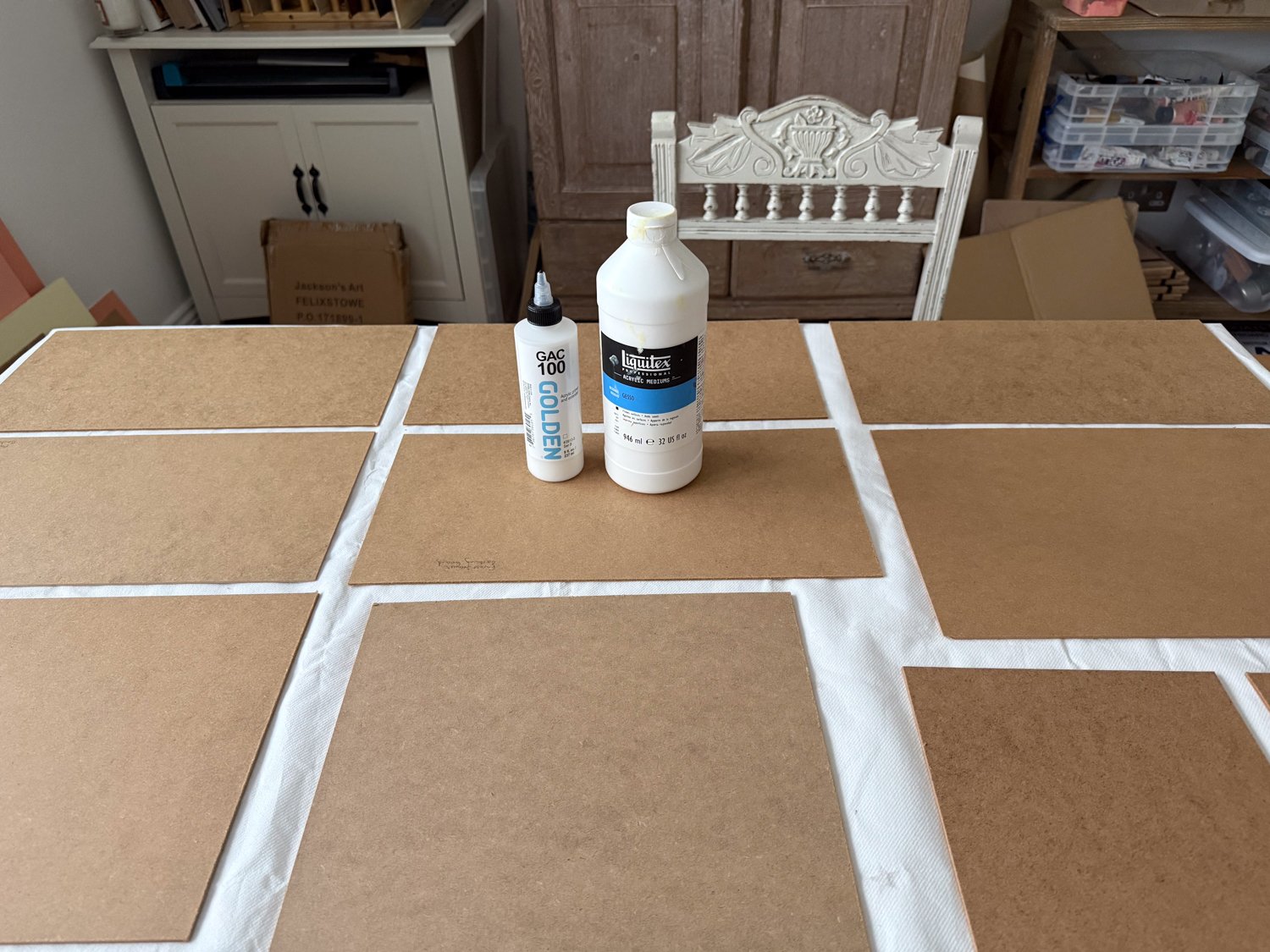
Wood panels ready to be primed
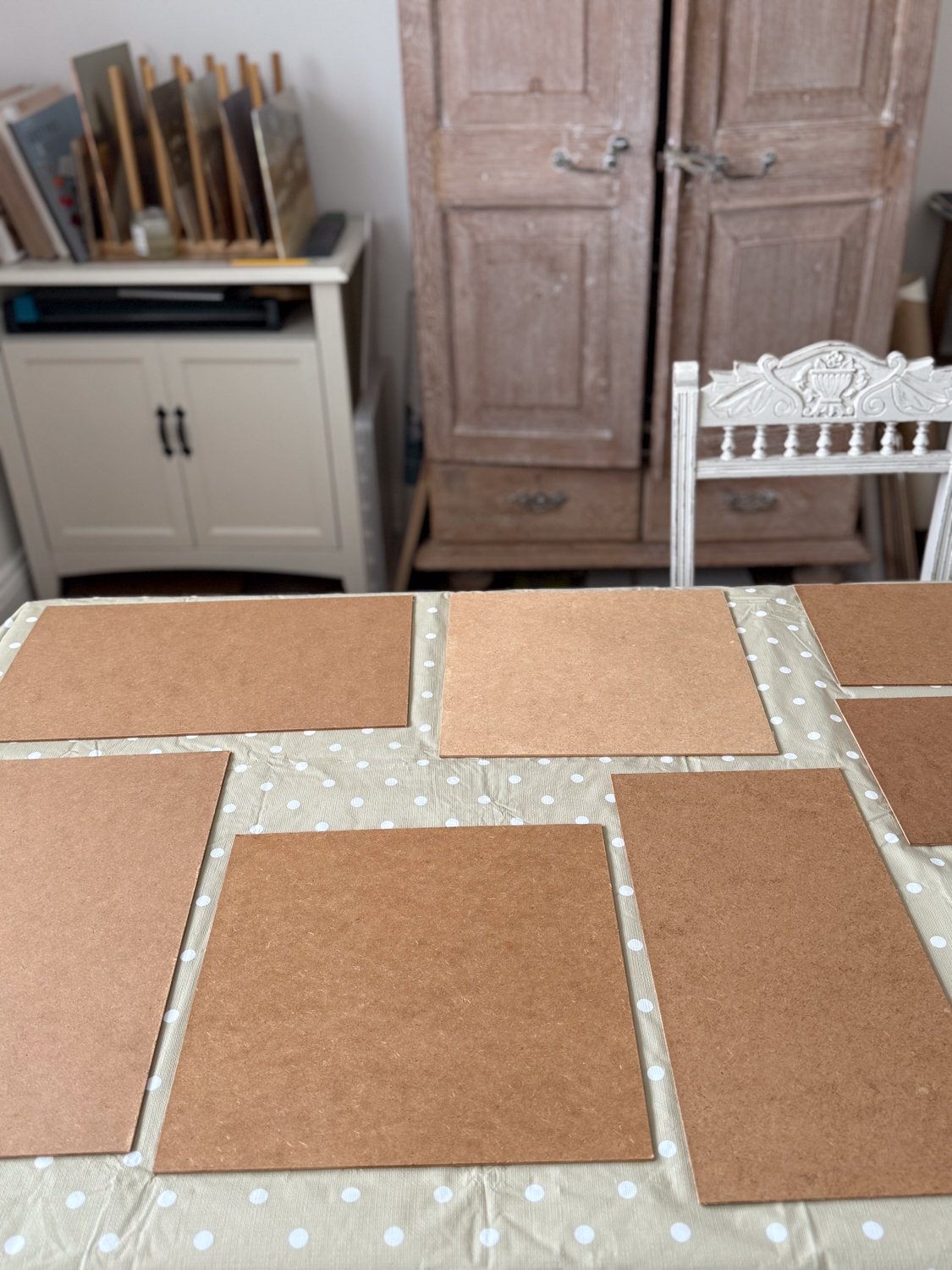
I prefer painting on wood panels or cradled wood rather than canvas (see previous blog post - “Substrates”). I also tend to buy unprimed wood rather than primed wood purely because they are cheaper. I then need to prime them myself so they are ready for painting (for example when painting woodwork in your house you usually use a primer on the wood before you paint a top coat - it’s the same when painting art panels). There are of course many different ways to do this but here I’ll show how I do it
Here I explain how I prepare wood panels/ art boards ready for painting onto. Heidi Laughton Art
Firstly, sand the wood if it needs it, especially the edges which can be jagged. Check which side of the panel is smoother (that will be the side you prepare) and I then tend to put some masking tape around the other side just to keep it clean from paint.
Seal the wood for discolouration
Wood panels are usually made of MDF or similar and should be sealed so that the yellow colour doesn’t seep into your painting over time. There are different mediums you can use for this. I use Golden’s Gac100 but I know some like to use shellac. I must admit that sometimes I miss this process and jump straight to using gesso, but it’s better if you can do it. Don’t forget to seal the edges of the boards too. Then let it dry completely
Paint the first coat of Gesso
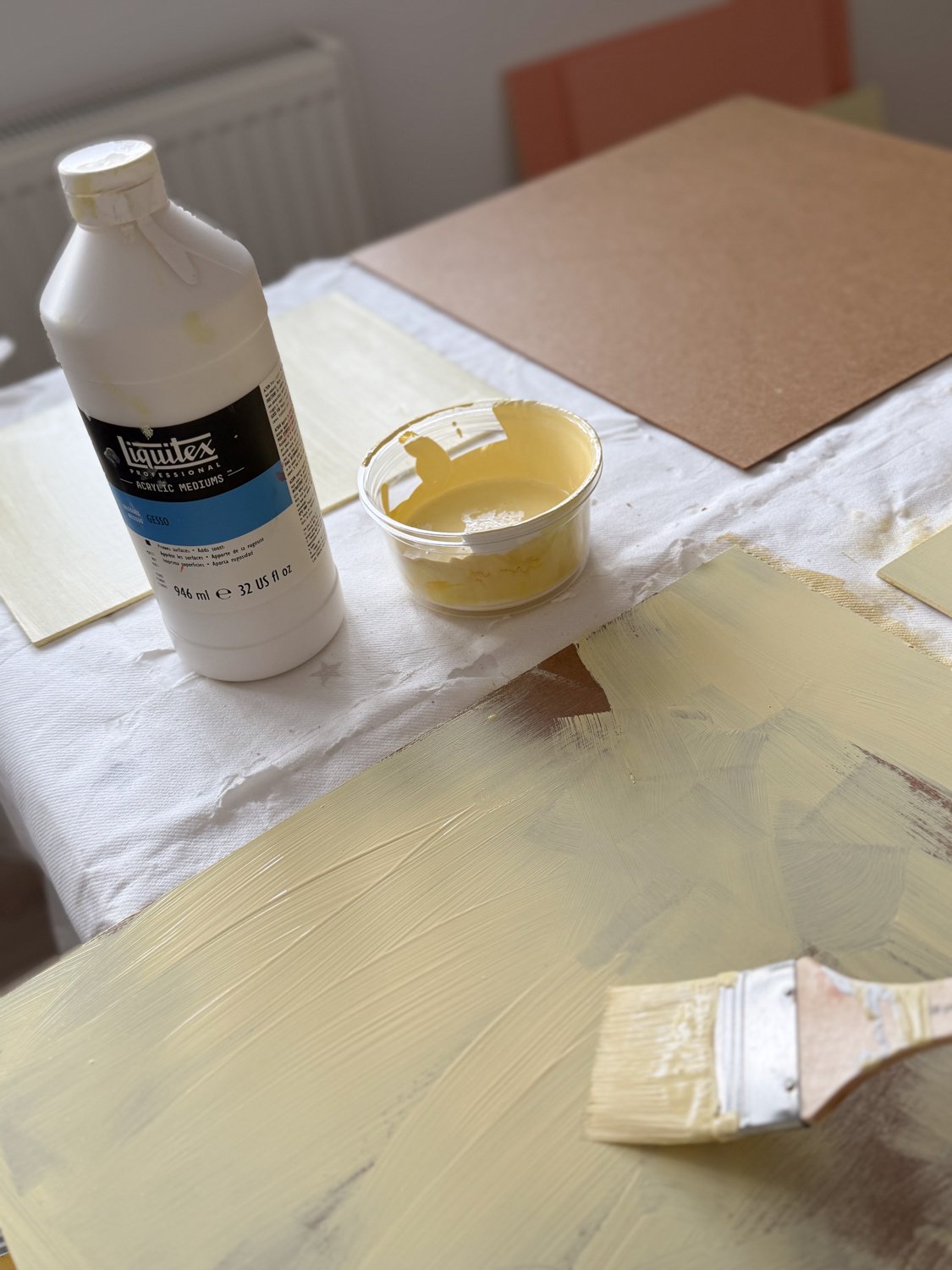
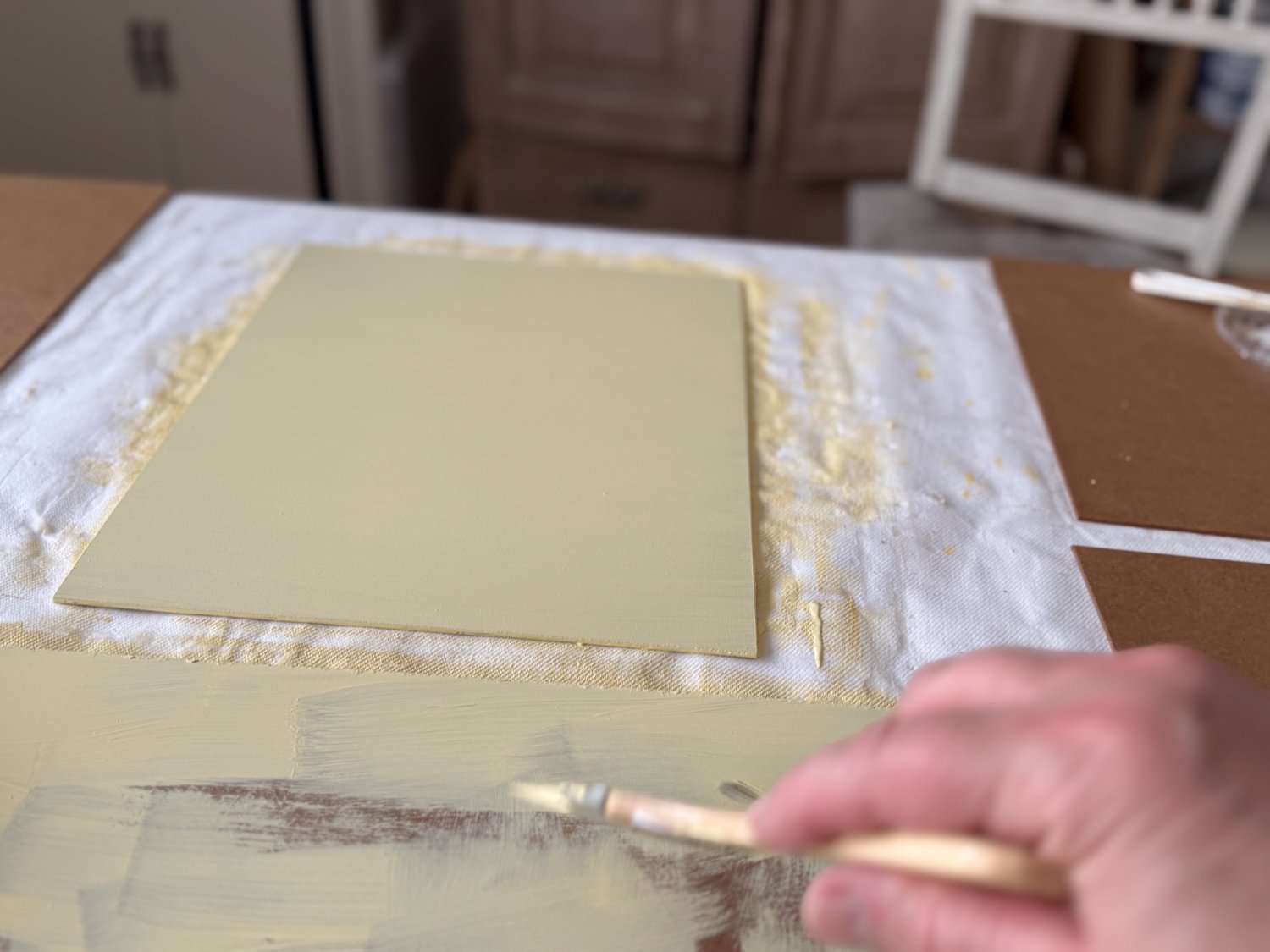
After this, you can apply the first coat of gesso. This is an acrylic, water-based primer which stops the next layers of paint from soaking into the wood. I like using Liquitex Gesso for this. You can add a drop of acrylic paint to this if you prefer your ground to be of a certain colour. My top tip is to prepare your panels in bulk and to use a wipeable table cloth or piece of plastic underneath (rather than paper) so you can wipe away the extra paint easily - it really helps. Use a large flat brush or sponge to apply the gesso with the strokes going in different directions. Smooth out as much as you can and then let it dry.
When painting cradled wood panels or panels of a deeper depth such as 25mm, you should also gesso the edges too.
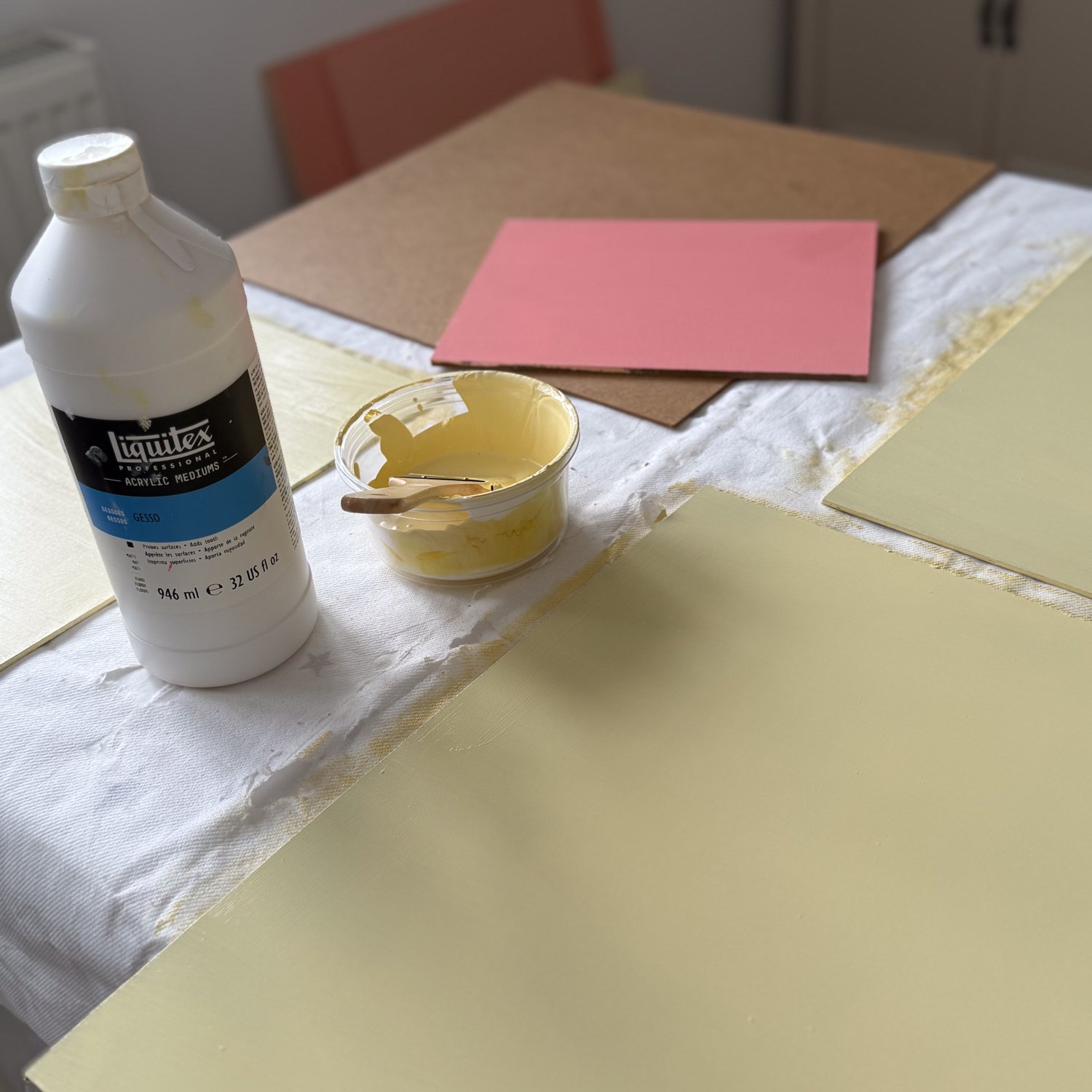
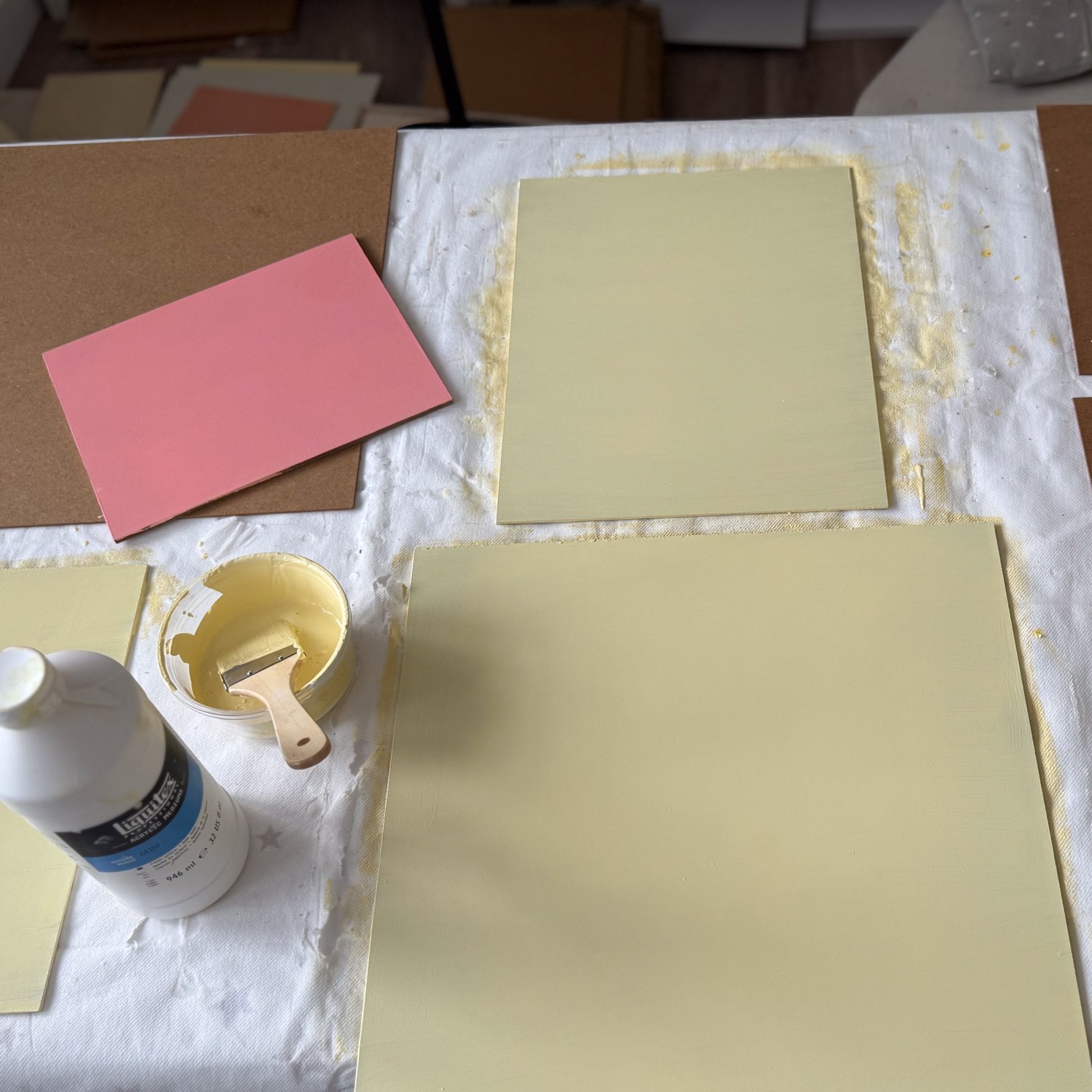
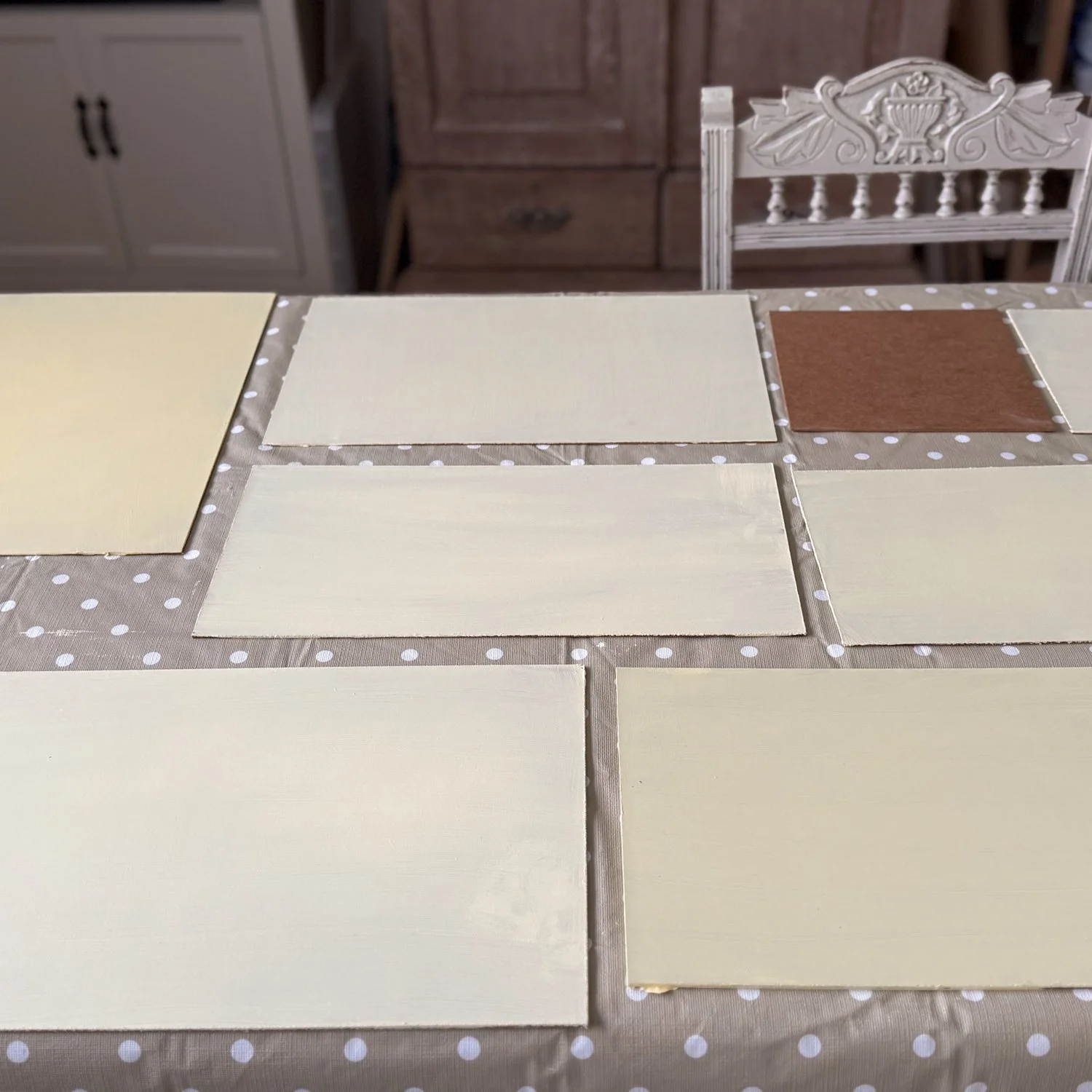
Apply a second coat of gesso
With the second coat, I sometimes like to use Michael Harding non-absorbent gesso here, as it has a lovely smooth texture. They also come in many different shades but I find it’s thinner than the liquitex gesso, hence I like to use both.
There are various opinions about how many coats of gesso you should apply. Personally I find that two is enough for my needs. Some people sand between each layer.
Once this second coat is dry, you are good to go. You can paint pretty much any medium on top of this, such as acrylic, gouache or oil paints
Anyway, that’s how I prepare boards for painting. I hope you found it helpful!
Let me know how you get on or if you do it differently?
To learn more about different substrate options for painting onto,
see previous blog post